

Vasiliki Fragkoudi
| Title: | Sustainable Management of cultural heritage and the interaction relationship with tourism marketing. Drawing a Cultural Route: Industrial heritage of Central and Eastern Macedonia through the Tobacco Warehouses |
| Position: | Ph.D Candidate |
| Email: | vfragkoudi@ionio.gr |
| Reg. Date: | 23-06-2022 |

- A. GKRITZALI
- P. MANOLITZAS
- E. SARANTAKOU
Tourism, as an increasingly accessible good for a large segment of the global population, has evolved into a highly competitive and expansive sector. The supply and demand of tourism products continue to grow, offering a wide range of choices that include leisure travel as well as specialized forms such as religious, cultural, and sports tourism. Within this competitive landscape, tourism stakeholders—ranging from travel agencies and independent operators to public institutions, states, and international organizations—strive to secure a position on the global tourism map. To remain competitive, a destination must develop a comprehensive strategy that highlights and promotes the unique characteristics that differentiate it from others.
In the case of Greece, tourism constitutes a cornerstone of the national economy, underscoring the importance of both service quality and effective promotion strategies. The country benefits from highly popular destinations as well as a rich legacy of cultural and industrial heritage, which can serve as key assets for tourism development.
This study focuses on the interrelationship between cultural heritage and tourism marketing, aiming to explore how their strategic integration can foster favorable conditions for sustainable development. Particular emphasis is placed on identifying the factors that influence this relationship. The research seeks to connect cultural assets with tourism marketing practices, as well as with the broader market environment, local context, and target audiences. Within this framework, cultural routes are examined as a key tool for the effective utilization and promotion of cultural heritage.
To achieve these objectives, the study is structured into four thematic sections. The first section explores the concepts of cultural and industrial heritage, including the factors that enhance public interest in monuments and their preservation, the principles of sustainable heritage management, the legal and institutional frameworks governing conservation, funding mechanisms, and the role of digital media in dissemination. It also examines the contribution of national and international organizations involved in heritage protection.
The second section focuses on tourism marketing, providing an overview of tourism as a concept—its historical evolution, categories, and forms—as well as marketing principles, objectives, tools, and practices. It further highlights the distinctions between traditional marketing and tourism marketing, particularly in relation to market research, consumer behavior, and motivational factors.
The third section examines cultural routes as a means of leveraging cultural heritage through tourism. It analyzes existing practices and their contribution to the promotion, communication, and enhancement of cultural assets within the tourism market.
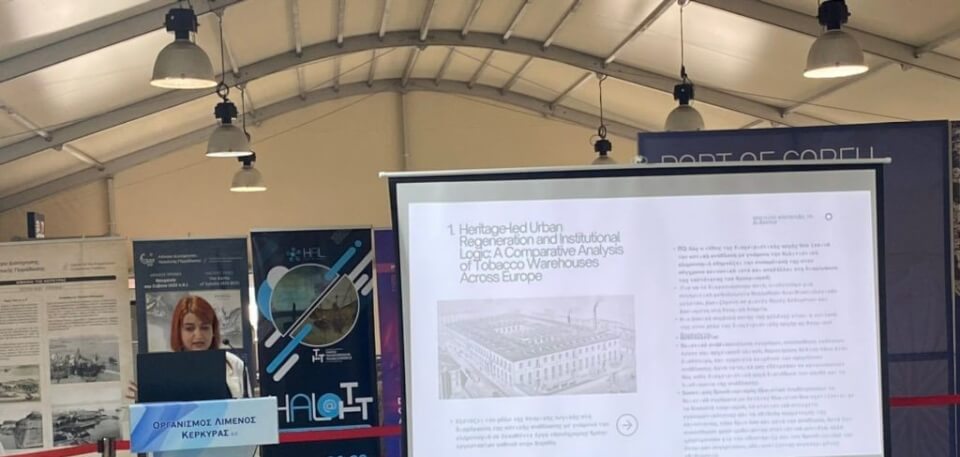
Finally, the fourth section proposes the design of a cultural route centered on the relatively underrepresented industrial heritage of Greece. Specifically, it focuses on the tobacco warehouses of Central and Eastern Macedonia and Thrace, aiming to highlight their potential as cultural tourism resources and to contribute to the diversification and enrichment of the national tourism product.
Overall, the study aspires to demonstrate how the integration of cultural heritage and tourism marketing can strengthen destination competitiveness and support sustainable tourism development.
Back





SECRETARIAT
SECRETARIAT72 I. Theotoki str, 1st Floor
(+30) 26610 87960, 87961, 87962
dtour@ionio.gr